An artwork record that brings order to a collection
Ceramics as a starting point for useful documentation. A practical set of fields, photographs and questions separating sources from observations.
An educational DEMO example prepared with AI assistance. Facts link to their sources; exercises are editorial suggestions.
The most useful document in a small collection need not be elaborate. It can be a simple record you return to when recalling a material, a measurement or a conversation with an artist. A well-kept record separates confirmed information from assumptions. Ceramics make a helpful starting point because their descriptions show how much precise wording matters.
Attribution: preserve the degree of certainty
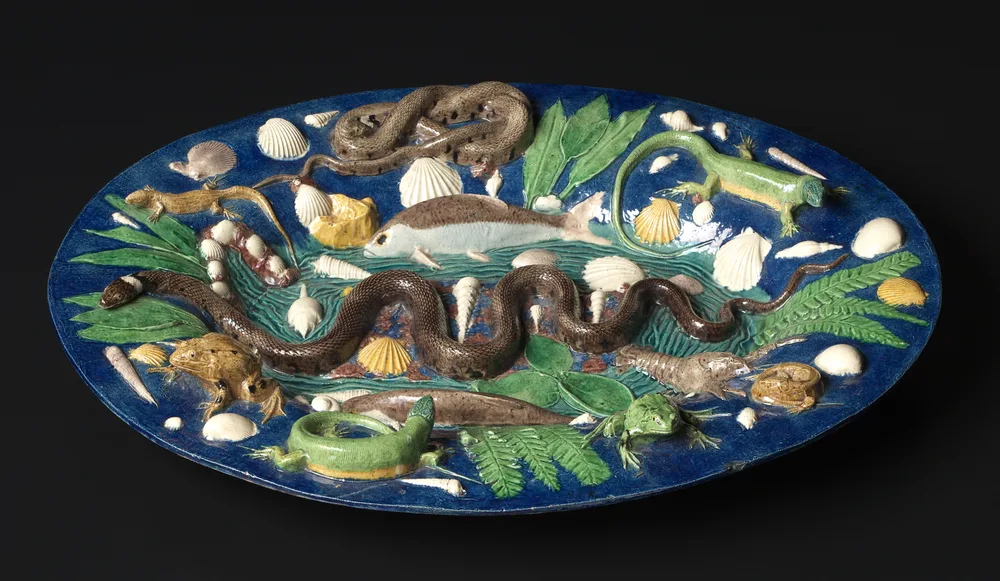
Cleveland describes the platter shown here as a work from the circle of Bernard Palissy, dated to the late sixteenth century and made of lead-glazed earthenware. The museum’s object record. We do not shorten that to an unqualified “Bernard Palissy”. Doing so would remove important information about attribution.
The V&A’s ceramics glossary also discusses terms relating to Palissy’s school or followers. The V&A glossary, section on Palissy. It is a good reason to retain attribution wording accurately in your own record rather than extracting only the best-known name from a description.
One record, several separate details
Separate title, attribution, material, technique, dimensions and condition. They do not have to fit into a single sentence. Individual fields are easier to check and update later. If the maker has not identified a material or the base’s composition is unknown, leave a visible question instead of entering the most likely answer.
For ceramics, distinguish appearance from a statement about intended use. “Shaped like a plate” is an observation. “Suitable for contact with food” requires separate information about the particular object. This article does not classify historical museum objects for use or assess contemporary products.
A template you can use
- Name and identifier: title and your own record number.
- Attribution: the exact wording supplied by the artist or source.
- Material and technique: separate descriptions, with gaps made clear.
- Dimensions: height, width and depth; whether these include a base.
- Copy: an edition number where relevant, with linked documentation.
- Source: a person, document or page address and the date consulted.
- Photographs: whole, underside, details and markings; the dates of the images.
- Condition notes: what was noticed, who described it and when.
- Agreements with the artist: presentation, handover and accompanying documents.
This is a way of organising information, not a certificate of authenticity. A record does not replace provenance, documents or specialist assessment when needed.
A photograph needs a caption too
Name your files so you can later identify which work they belong to. Include the view and date in the description, such as “underside, photograph supplied by the artist”. If you have several copies from an edition, check which one is shown in photographs of signatures and condition.
Do not digitally remove small marks simply to make the record look perfect. Documentation aims to show clearly what was photographed. You may separately keep a presentation image, but do not confuse it with a record of condition.
Updating without erasing history
When you learn something new, add the change with its date and source. Do not silently remove earlier wording, particularly when it came from another person. This lets you understand why the description changed and which information is current.
In condition notes, avoid making your own diagnosis from a photograph. “A visible line near the rim” describes an observation. Its cause, significance and appropriate response are separate questions. Do not attempt cleaning, repair or surface testing on the basis of this organisational guide.
Try the method with a museum example
Open the platter from the circle of Palissy. Put three details from the museum source and two observations of your own into a trial record. Mark where each came from. Then check which fields you cannot honestly complete from the reproduction alone.
Do not copy the fictional price, weight or condition from DEMO’s commercial fields into a description of the museum original. The portal demonstrates offer management; the museum source describes the historical object. Keeping them separate is the first exercise in organising a collection.